

By Research Fellow and Senior Policy and Projects Manager Grace Corcoran
The deepening relationship between the Maldives and Australia signals Canberra’s growing strategic interest in the Northeast Indian Ocean. For much of the past two decades, Australian strategic attention has focused heavily on the Pacific, while security in the Indian Ocean was pursued through partnerships with larger regional powers, particularly India. But as strategic competition grows across the region, Australia is shifting how it engages with smaller — but significant — regional actors.
Australia’s 2026 National Defence Strategy highlights the importance of the Northeast Indian Ocean to the country’s sea lines of communication and emphasises Canberra’s strategic interest in the region. It specifically identifies the Maldives, alongside Bangladesh and Sri Lanka, as countries with which the Department of Defence will strengthen engagement on regional security and collective maritime domain awareness. This represents a notable shift from the 2024 Strategy, in which the Maldives was mentioned primarily in the context of existing defence partnerships.
Despite its small size, the Maldives’ location near one of the world’s busiest maritime routes and its vast exclusive economic zone give the country an important role in the governance and security of the Indian Ocean. In 2025, Australian Defence Minister Richard Marles noted that around 50 per cent of Australia’s seaborne trade travels just north of the Maldives, underscoring the importance of Maldivian maritime surveillance to Australia’s economic security.
Diplomatic activity in 2026 signals this shift in attention. In July 2026, Australia’s Special Envoy for Indian Ocean Affairs Tim Watts attended the Maldives’ 61st Independence Day celebrations as a special guest of the Maldivian government — one of his first visits to an Indian Ocean country since taking up the role. The same week, the third Maldives–Australia Senior Officials’ Talks addressed ways to strengthen cooperation in defence, security and maritime affairs, including maritime domain awareness, aviation and port security, as well as cybersecurity.
The growing emphasis on maritime security is also reflected in practical cooperation. In May 2026, the Maldivian Ministry of Defence and the Australian Border Force signed a new Memorandum of Understanding on civilian maritime safety and security. The agreement includes joint exercises, coordinated maritime operations, information-sharing and technical cooperation designed to improve responses to regional maritime security challenges.
Similarly, on 19 April 2026, the Maldives formally took delivery of its Guardian-class patrol boat during an official handover ceremony at HMAS Stirling in Western Australia. The vessel will strengthen the Maldives’ maritime surveillance capacity and support its humanitarian and disaster-response operations. As this marks the 24th and final Guardian-class patrol boat delivered by Australia to a regional partner, the handover represents Australia’s significant investment in Maldivian maritime capability and deepening security relationship with the Maldives.
These initiatives are significant because they focus on strengthening Maldivian capability rather than expanding Australia’s presence. For the Maldives, security challenges extend well beyond traditional defence concerns. With more than 98 per cent of its territory consisting of ocean, the country faces a range of non-traditional security threats. Rising sea levels pose an existential risk, while illegal, unreported and unregulated fishing threatens both marine ecosystems and economic livelihoods.
The country’s dispersed geography — spread across nearly 1200 islands — makes surveillance, disaster response and maritime governance particularly difficult.
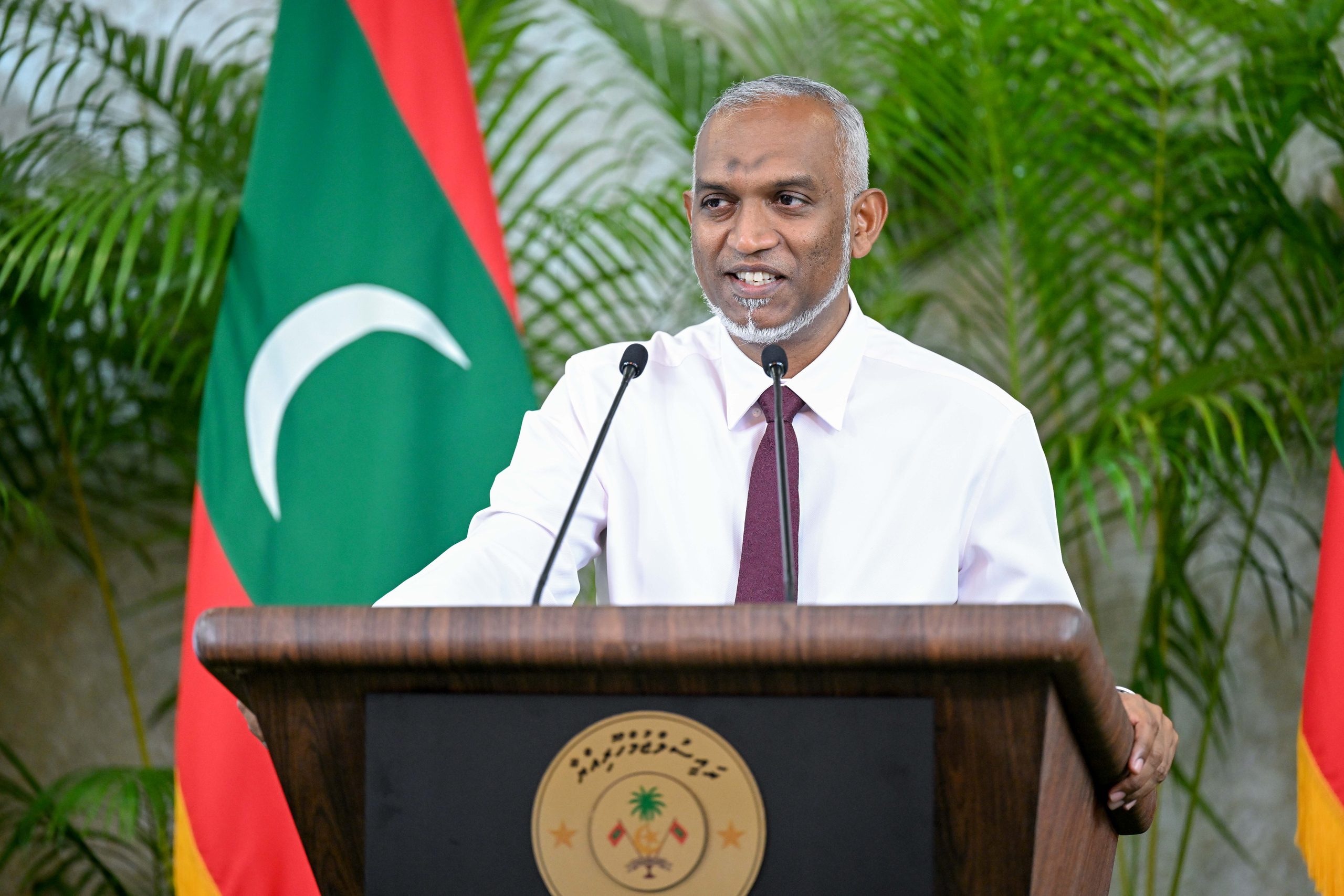
The Maldivian government has been placing greater emphasis on national security. In February 2026, Maldivian President Mohamed Muizzu announced plans to double the capacity of the Coast Guard and the Parliament introduced the National Service Bill, which outlined a framework for including unemployed youth in uniformed services. In April 2026, the Maldives’ Ministry of National Defence was renamed the Ministry of Defence and National Service to include the national service program within its mandate. Australia’s focus on building Maldivian capability aligns with this broader shift in the Maldives towards strengthening its own national security institutions.
Climate resilience and environmental management provide another area of shared interest. Australia has supported initiatives involving environmental monitoring, protection and rehabilitation of coral reefs, which are fundamental to Maldivian tourism, fisheries and coastal protection. For Canberra, supporting this resilience is not simply development assistance. If the Maldives is better able to withstand climate shocks and sustain its economy, it will be less vulnerable to instability and better able to exercise independent foreign policy choices.
India and China provide the broader strategic context for this engagement. India has historically been the Maldives’ closest security partner, but Muizzu’s 2023 election on an ‘India Out’ platform demonstrated that this position could no longer be assumed. Though relations have since stabilised through high-level diplomacy and renewed Indian financial and strategic support, the episode reinforced the Maldives’ desire for greater flexibility. China has benefited from this diversification, building on its substantial economic presence through infrastructure investment and expanding security cooperation. In 2024, China and the Maldives signed a defence cooperation agreement covering military assistance, training and non-lethal equipment.
These developments demonstrate why Canberra no longer assumes that regional stability will be maintained through traditional partnerships with larger powers alone. Australia has a direct interest in developing its own relationships with strategically located Indian Ocean states. For Canberra, the Maldives is more than a regional partner — it is a capable maritime actor in the Indian Ocean vital to Australian security and prosperity.
This article was originally published by the East Asia Forum and can be referenced here: https://doi.org/10.59425/eabc.1787695200. Image credits: The President’s Office – Republic of the Maldives.