Seabed program
The Seabed Program lays the foundations for Australian strategic thought on seabed critical infrastructure protection and provides policy and strategic choices available to Defence
ABOUT THE PROGRAM
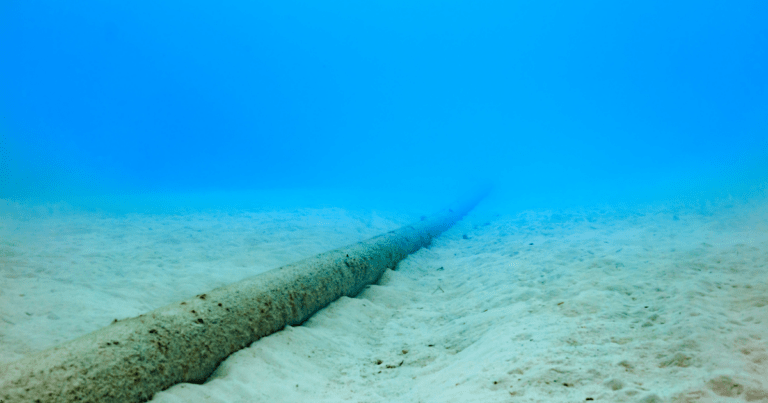
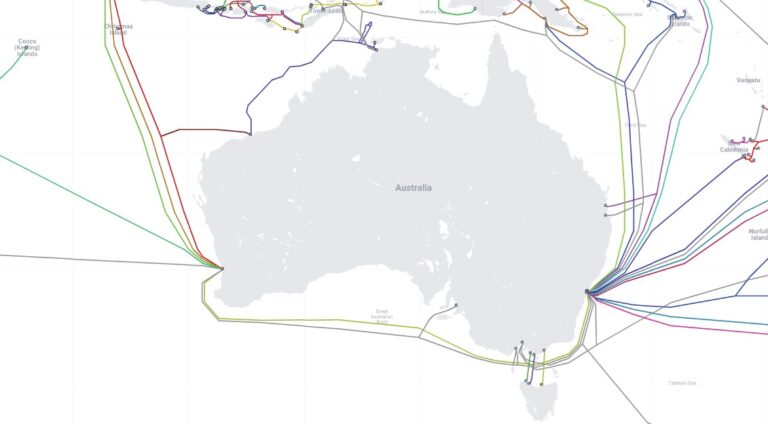
Seabed critical infrastructure is rapidly expanding across the Indo-Pacific, serving as a superhighway for data-carrying fibre optic cables, gas pipelines, electricity cables, and both fossil and renewable resources. With seabed mining set to supply industries with critical minerals, the seabed is becoming increasingly vital to modern society. However, as the Ukraine War has demonstrated, conflict and geopolitical tensions also unfold beneath the ocean’s surface. The 2022 Nord Stream pipeline attack is a stark reminder that seabed warfare, while often seen as a contemporary threat, has played a role in conflicts for over a century.
The Seabed Program establishes a strategic framework for Australia’s approach to seabed critical infrastructure protection, outlining key policy and defence options.
In July 2024, Australia India Institute research fellow Samuel Bashfield received an Australian Department of Defence Strategic Policy Grant for his new major research project titled ‘Defending Critical Seabed Infrastructure’. Led by Dr Bashfield the project includes collaboration with Associate Professor Sue Thompson and Dr. David Brewster (ANU National Security College) and Associate Professor David Lee (UNSW Canberra).
The Seabed Program further expanded in November 2024, with Dr Bashfield successful in securing a Department of Foreign Affairs and Trade’s Australia-India Cyber and Critical Technology Partnership (AICCTP) grant for the project ‘Securing the Internet’s Backbone: Developing an Australia-India Framework for Strengthening Submarine Cable Connectivity, Resilience and Supply Chains’. In collaboration with the International Institute of Information Technology Bangalore (IIIT-B), and CyberCX, Australia’s leading provider of professional cyber security, this project led to a variety of policy-focused publications and a Track 1.5 Dialogue held in Perth in 2025.
In 2026, the Institute received a further Department of Foreign Affairs and Trade’s AICCTP grant to build on this dialogue, addressing three urgent questions:
- What are the specific supply chain vulnerabilities affecting submarine cable networks in the Indo-Pacific?
- How can Australia and India cooperatively diversify dependencies in cable manufacturing, deployment, and maintenance?
- What policy frameworks and industry partnerships can strengthen regional supply chain resilience?
Led by Dr Bashfield, in partnership with the La Trobe Centre for Global Security, La Trobe University, and the International Institute of Information Technology, Bangalore (IIIT-B), the project will lead to research publications, a Track 1.5 dialogue in India, and a policy framework for regional supply chain cooperation that will inform government decision-making across the Indo-Pacific.
Through research, dialogue and actionable recommendations, these outputs will advance Australia and India’s vision for a secure, open and resilient Indo-Pacific.