By Board Member and Distinguished Fellow John McCarthy AO
Since President Trump’s inauguration, America’s friends and enemies – categories increasingly hard to define with precision – have been buffeted by the administration’s policy vicissitudes. Of note has been its weaponisation of tariffs not only for economic ends but, in the case of countries such as Brazil, India and Canada, also for overtly political ones.
This president is unmoved that a substantial part of the American commentariat – conservative and liberal – suggests that most of his actions, particularly on tariffs, are not in the interests of the United States.
Above all, Trump seeks to be a “winner”. It is a bonus when his opponents – politicians, governments or just people who get in the way – can be categorised as “losers”, an expression which in America has as pejorative a ring as “winner” has a positive one.
Like most people, we Australians focus on the actions of countries that have a direct and visible impact on us. We worry about a 10 per cent tariff. We quaver about dangers to AUKUS.
A country’s security in the broad sense is premised not only on its own resilience, on its defence structures and on the direct undertakings that its allies give it. It is also affected by the internal health and external outlook of friends and neighbours, and by the stability of the international system in which we all work.
By extension, in the specific circumstances of the US-Australia relationship, American actions can be contrary to Australian interests if they have an adverse effect on Australia’s regional friends – and even further afield, on NATO countries.
The US and Japan
In recent years, we have made much of the Quad – the grouping of the US, Japan, India and Australia, intended as a regional structure to temper Chinese influence in our region.
Trump has levied a 15 per cent tariff on Japan, reportedly prompted as much by his prejudices going back to the American-Japanese trade schism of the late 1980s as by economic rationality.
What is good for Toyota is good for Japan and the reverse is also true. Toyota recently estimated that tariffs on automobiles would entail a $US9.5 billion ($14.6 billion) cut in the company’s operating profit for the year ending in March 2026.
American economic measures are hurting Japan’s pocket. They are also having an emotional impact.
A former Japanese diplomat noted recently that with Russia to its north and North Korea and China to its west, Japan had negligible room to manoeuvre away from its dependence on the US.
Another former Japanese official argued that it might be time for Japan to begin to repair economic relations with China, including supporting its membership of the Comprehensive and Progressive Agreement for Trans-Pacific Partnership (CPTPP).
The official didn’t indicate if his view had much support and this does not signal change in Japan’s strategic posture. But it suggests Japan is thinking about how much trust it can have in its American ally.
India and America
The United States’ recent dealings with India have been even more fraught.
The Indians took umbrage when the US claimed credit for a ceasefire in May between India and Pakistan. This followed Indian aerial action against Pakistan territory in response to a terrorist attack on Kashmir.
For India, any issue involving Pakistan is neuralgic. India is also ultra-sensitive to suggestions that India-Pakistan issues should be subjected to international mediation.
Indian was angered further when Trump threatened a 25 per cent tariff rise on India (on top of 25 per cent already imposed) because of its longstanding practice of purchasing oil from Russia in defiance of United States sanctions over Ukraine.
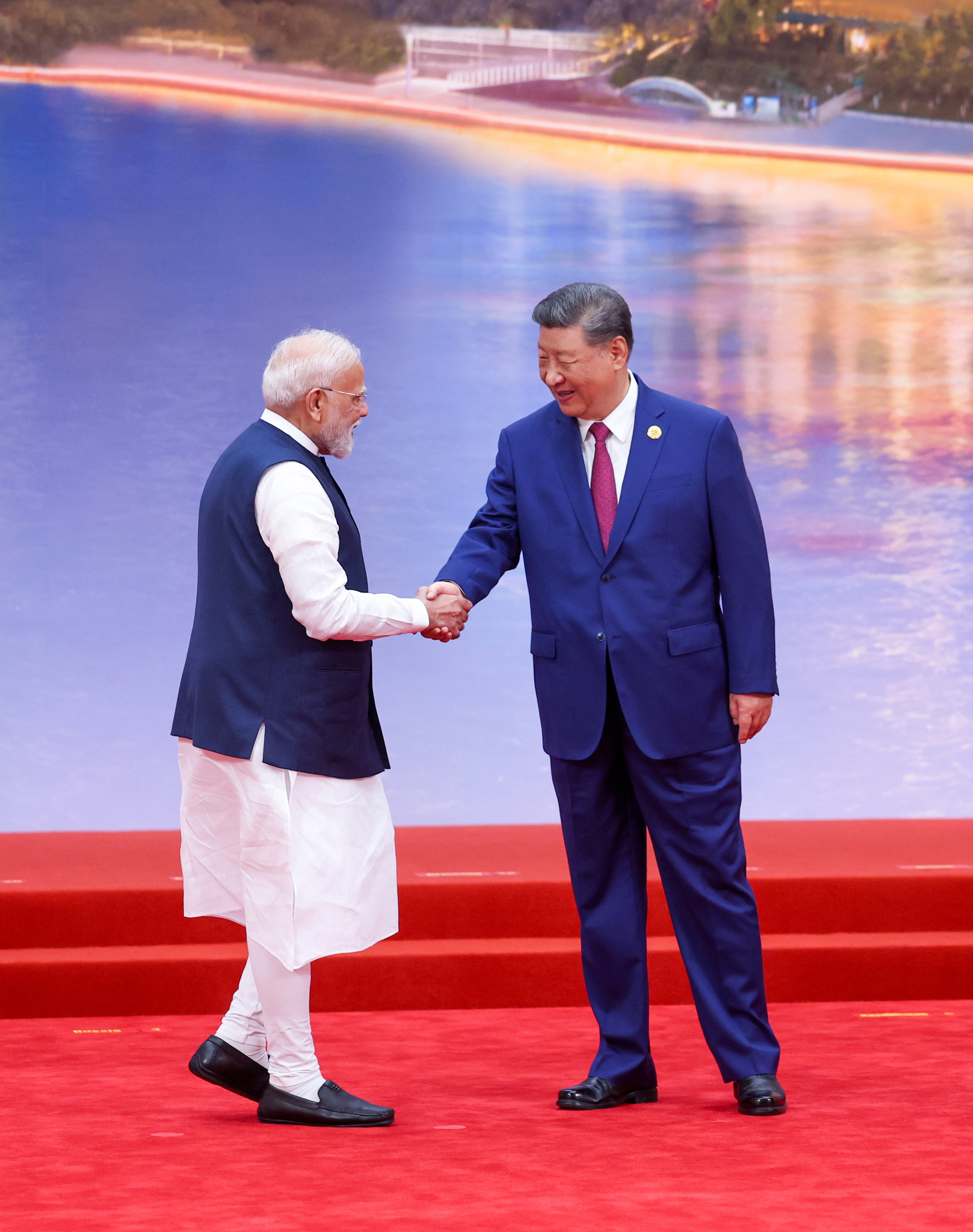
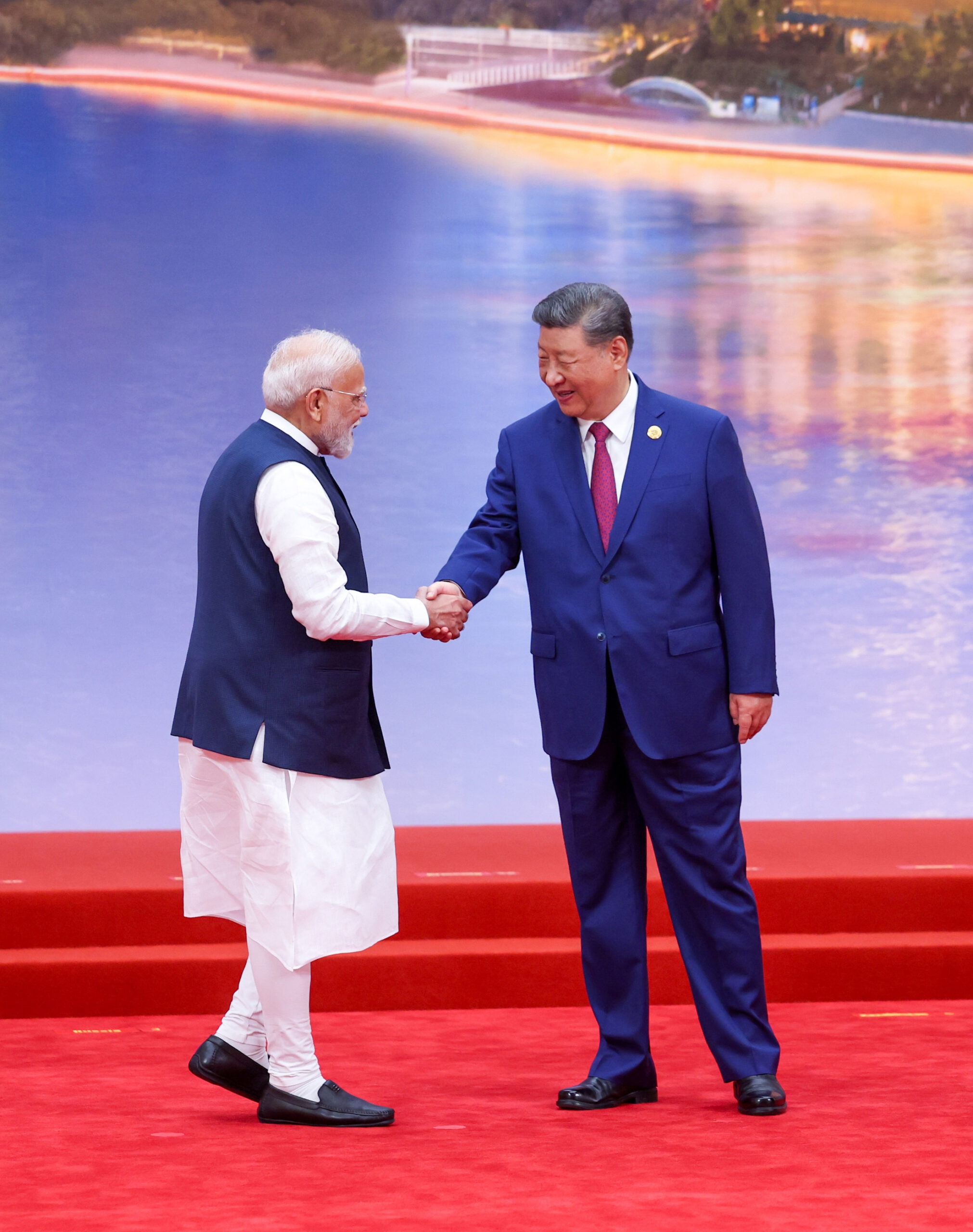
These developments also need to be read against an improvement in India’s relations with China since last October. This shift stemmed from an agreement about the management of border tensions in the Himalayas. There was also a meeting in Russia between Chinese President Xi Jinping and Indian Prime Minister Narendra Modi in October last year. And Modi is scheduled to visit China later this month.
India is not about to switch horses from the US to China. China and India have been geopolitical rivals since they fought a border war in 1962. But Modi’s relationship with Trump is a far cry from what it was a few months ago. And his dealings with Xi are in better shape than a few months ago.
Trouble in South-East Asia
In South-East Asia, where the contest for influence between the US and China is most pivotal, the US has imposed tariffs of between 19 per cent and 40 per cent on nine out of the 10 ASEAN countries.
Even Taiwan, the survival of which depends on US support, has been subjected to a tariff of 20 per cent. High-level defence talks have been postponed and Taiwan President Lai Ching-te was recently denied transit rights in New York en route to Central American countries with which Taiwan has diplomatic relations. The betting is that these United States actions relate to its looming trade talks with China.
The weakening of America’s ethos incurs reputational damage to the rest of the West, including Australia.
And there is the impact on the rest of the world of Trump’s actions.
The late Harvard professor Joseph Nye postulated that America’s global pre-eminence at the end of the 20th century was not just attributable to military and economic power but to its capacity to persuade, based on its principles, reputation and credibility. He coined the term soft power to describe that capacity.
Shortly before he died this year, Nye argued that with Trump’s second coming, America’s soft power would decline dramatically.
This is happening – possibly irreversibly. For example, America’s support for Israeli policies in Gaza has put it at odds not only with the global south but with its partners in the West. The dramatic shrinkage in America’s aid program suggests that the administration’s obsession with the accretion of wealth outweighs other policy impulses. And Trump’s domestic policies – on immigration, education, health and so on – also diminish America’s reputation.
Over the past generation, Australia has channelled too little of its foreign policy energy into the region and too much into our relations with the US. However, we have generally been able to claim that Western principles, as epitomised by the US, were a decent foundation on which to premise our external policies. The weakening of America’s ethos incurs reputational damage to the rest of the West, including Australia.
One of America’s early puritan settlers, John Winthrop, described Boston as “the city upon a hill, the eyes of all people are upon us”. The phrase later became associated more widely with the positive aspects of American exceptionalism.
We are poorer without the city on a hill. No winners, all losers.
This article was originally published in the Australian Financial Review. (Image: Prime Minister of India Photo Gallery)